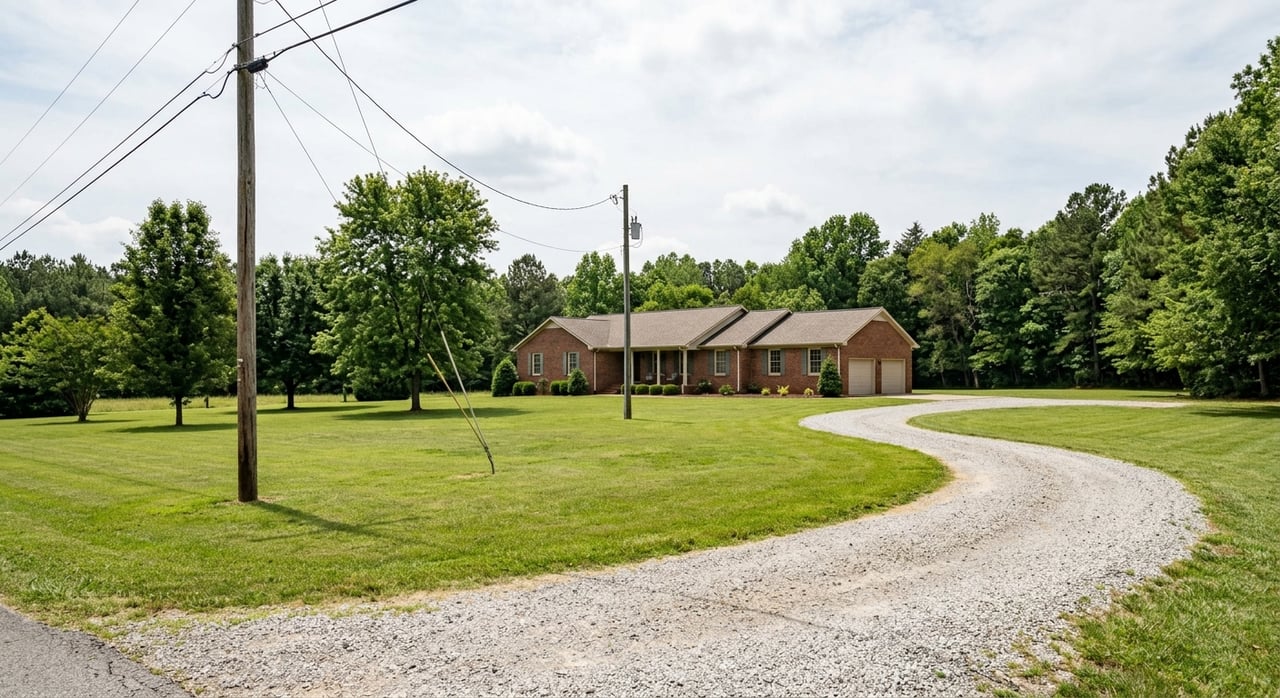
Thinking about buying acreage near Big Cabin? The land itself may catch your eye first, but the real decision usually comes down to what you can actually do with it. If you want room for a homesite, horses, hobby farming, or simply more elbow room, you need more than a price-per-acre number to make a smart choice. This guide walks you through the practical details that matter most in the Big Cabin area so you can buy with more confidence. Let’s dive in.
Why Big Cabin acreage is different
Buying country land near Big Cabin is not the same as buying a house in town. Rural tracts often bring added questions about road access, utilities, title work, surveys, and land use. In Oklahoma, that difference is clear enough that the Oklahoma Real Estate Commission uses specific contract forms for vacant lots and land transactions.
Those forms address items like inspections, surveys, utilities, zoning, and land-use issues. They also note that features such as barns, pens, fences, sheds, outbuildings, and gates can be part of the property when they exist. That makes it important to look beyond the acreage count and focus on how the land is set up.
Start with access and legal description
Before you fall in love with a tract, confirm how you legally get to it. The official ODOT town map for Big Cabin notes that roads shown are open to public travel, but that does not mean the map is identifying who maintains them. For rural buyers, that is a major distinction.
You will want to verify whether the property has deeded access, an easement, or another recorded right of access. A road may appear easy to use today, but what matters is the legal right to reach your land and whether road responsibility is clear. This is one of the first due diligence items to handle, not something to save for later.
If the tract is unplatted, the legal description may also look different from a neighborhood lot. In Oklahoma, unplatted land is often described by section, township, and range rather than by subdivision block and lot. That can sound technical, but it is a normal part of rural land transactions.
Title work matters more on land
Title review is important in any real estate purchase, but it can carry even more weight on acreage. Easements, access rights, and mineral reservations can all affect how you use the property. That is why title work should happen early in the process.
The Oklahoma Abstractors Board explains that state law does not require an abstract or title insurance to buy real estate. Still, abstract companies search county records, and many buyers choose title insurance or an abstract-and-title-opinion approach. On rural property, those record searches can help uncover issues that are easy to miss at first glance.
Mineral rights need separate attention
One of the biggest differences with country land is mineral rights. Oklahoma land contracts give mineral rights their own section and state that the seller may not own them and does not warrant ownership. In simple terms, owning the surface does not automatically mean you own what is below it.
If mineral rights matter to you, make that part of your due diligence from the beginning. This is especially important if you are buying land for long-term use, future value, or specific plans for the property.
A survey is often worth it
Fence lines and actual boundaries are not always the same thing. On acreage near Big Cabin, a survey can help confirm where the property begins and ends, where access sits, and whether any encroachments or old assumptions need to be addressed.
The Oklahoma land contract allows a buyer to obtain a boundary or land survey at the buyer’s expense. A seller may provide an existing survey, but if a title company or lender does not approve it, a new survey may still be required. That makes a survey less of a luxury and more of a useful planning tool on many rural purchases.
A survey can be especially helpful if the tract is unplatted, has older fence lines, or may need a driveway or utility easement. It can also help you think more clearly about building areas, pasture layout, and future improvements.
Check utilities parcel by parcel
One of the biggest mistakes acreage buyers make is assuming nearby service means available service. Big Cabin does have public utility infrastructure, and state reporting shows investment in local water and wastewater improvements through the Big Cabin Public Works Authority. Northeast Oklahoma Electric Cooperative also states that its District 4 covers the Big Cabin area.
That said, utility availability still needs to be confirmed for the specific parcel. A neighboring tract may have a water tap or electric service while the one you are considering may need additional work, line extensions, or different solutions altogether. Parcel-level verification is the only safe approach.
Water questions to ask early
If the land will rely on public water, ask whether a tap is available and what steps are required to connect. If the tract will need a well, understand what type of use you have in mind before you move forward.
The Oklahoma Water Resources Board says permits are required for all uses of water in Oklahoma except domestic use. Domestic use includes household use, farm and domestic animals up to the normal grazing capacity of the land, and irrigation of up to three acres for gardens, orchards, and lawns. If your plans go beyond that, you may need to explore additional requirements.
If a non-domestic groundwater well is needed, the state requires authorization before drilling, and well drillers and pump installers are licensed by the Oklahoma Water Resources Board. If you are looking at land for horses, hobby farming, or future expansion, that distinction matters.
Private wells need management
A well is not a one-time checkbox. The Oklahoma Department of Environmental Quality says privately owned wells are not regulated by state or federal government, which means the owner is responsible for water safety. Routine testing is recommended.
For buyers, that means a private well should be viewed as an ongoing system with equipment, maintenance, and testing responsibilities. If a tract already has a well, it is smart to gather as much information as possible about its condition and history.
Septic is a site question
If a property does not connect to a public sewer system, septic feasibility becomes a key issue. DEQ states that before a new on-site sewage system is installed or an existing one is modified, the property needs a Report for On-Site Sewage and an Authorization to Construct. The process depends on soil profile testing and sometimes percolation testing.
That is why septic is not just a permit question. It is also a land suitability question. Soil and site conditions affect what may be possible and what it may take to prepare the property for a homesite.
Match the land to your intended use
Acreage works best when it fits your real plan, not just your wish list. If you want horses, a hobby farm, or room for animals, the property needs to function for that purpose. Open land can look perfect at first glance, but the details of pasture quality, fencing, water, and stocking levels are what shape everyday use.
OSU Extension notes that horse and pasture management works best when owners set realistic goals based on both animal and agronomic factors. It also cautions that small-acreage horse farms require especially realistic expectations. That is helpful guidance for buyers who are comparing one tract to another.
Horse acreage takes planning
Horse buyers often ask how many acres they really need. OSU Extension says unimproved native grass pastures in Oklahoma may require 5 to 10 acres per horse, while better-managed bermudagrass can support more intensive stocking. Controlled grazing and temporary fencing can also help smaller properties function more efficiently.
The key point is that horse suitability is not only about total acreage. It is also about pasture condition, grazing management, and how the land is set up. A lower-priced tract may still need meaningful improvement before it supports your goals.
Soil testing can save guesswork
If pasture, hay, or garden use is part of your plan, soil quality matters early. OSU Extension’s soil testing lab serves Oklahoma, and county extension offices can help submit samples and interpret results. That can give you a clearer picture before you spend money on seed, fertilizer, or lime.
For buyers who want usable land, soil testing can be a practical next step after closing or even part of your planning before purchase. It helps turn raw acreage into a more informed decision.
Fencing is not just cosmetic
For horse and livestock properties, fencing deserves real attention in your budget. Extension guidance says horse fences should be safe and visible. In other words, fencing is part of land function, not just appearance.
If the existing fence line is older, mismatched, or poorly placed, improvements may be needed before the property works the way you want it to. That can affect both cost and timeline.
Budget beyond the purchase price
With acreage, the list price is only the beginning. Oklahoma land contracts separate sale price from items like title evidence, surveys, and closing responsibilities. On top of that, your site-development costs may include access work, electric setup, water connection, well work, septic work, clearing, fencing, or pasture improvements.
That does not mean every tract will need all of those things. It does mean you should evaluate them as separate budget categories rather than assuming the purchase price tells the whole story. A property that looks affordable on paper may still require significant work to become a ready-to-use homesite or livestock property.
Here are a few costs buyers often need to think through:
- Title work and closing costs
- Boundary or land survey
- Driveway or access improvements
- Water tap or well-related work
- Septic testing and installation
- Electric service confirmation or extension
- Fence repair or replacement
- Clearing, grading, or pasture work
Build the right local team
The right property matters, but so does the team helping you evaluate it. In a rural purchase, practical local guidance can make the process clearer and less stressful.
An acreage-savvy real estate agent can help you spot issues that are easy to miss when you are focused on location or price. Oklahoma’s separate land contract forms are a reminder that land deals have their own moving parts. Working with professionals who regularly handle access, utility, survey, and land-use questions can help you stay ahead of problems.
You may also need support from title or abstract professionals, a surveyor, septic professionals, well specialists, and utility providers. For buyers planning pasture or hobby-farm use, the OSU Extension office serving Craig County can also be a useful resource for soil testing support and forage guidance.
What matters most near Big Cabin
If you are buying acreage and country land near Big Cabin, think of the purchase as a site-planning decision as much as a real estate decision. Access, title, mineral rights, utilities, septic feasibility, fencing, and land suitability all shape whether a tract truly fits your goals.
That is where local experience can make a difference. When you have a clear process and a trusted guide, you can ask better questions, compare properties more realistically, and move forward with more peace of mind. If you are ready to explore acreage near Big Cabin, Danna Price can help you navigate the details with practical, local guidance.
FAQs
What should you verify first when buying land near Big Cabin?
- Start by verifying legal access, including whether the property has deeded access, an easement, or another recorded right to reach the land.
Do mineral rights automatically come with acreage in Big Cabin?
- No. Oklahoma land contracts treat mineral rights separately, and the seller may not own them or warrant ownership.
Does every acreage tract near Big Cabin have water and electric service?
- No. Utility availability should be confirmed parcel by parcel, even if nearby properties already have service.
Can you assume a tract near Big Cabin will support a septic system?
- No. Septic feasibility depends on site conditions, including soil profile testing and, in some cases, percolation testing.
How much land do you need for horses near Big Cabin?
- It depends on pasture quality and management, but OSU Extension says unimproved native grass pasture in Oklahoma may require 5 to 10 acres per horse.
Is a survey important when buying rural land in Craig County?
- Yes. A survey can help confirm boundaries, access, fence-line issues, and potential encroachments before they become bigger problems.